Write it down.

After a whirlwind of a holiday season I've just stumbled out into the light of day and turns out a new year is upon us. Today is my first official day back at work. I'm recharged and filled with exciting new ideas. The workshop's siren song has been whispering in my ear for two weeks and my fingers itch.

There is still one very important thing I have to do before I get back into it and it is the main reason why I have deliberately been unproductive for the last two weeks. All this week I'll spend my time not in the workshop, but hunched over a notebook planning out what I want to do this year.

Now I know I've said I'm not one for planning, and I still say it's more important to take action than to get bogged down worrying about minutiae, but this week will be one of the most important of the year. The trick is to not try to figure out everything at once but spend some time figuring out what direction to go. It's like finding your way out of the woods with a map and a compass. You don't stop and mark out every tree you need to pass. You get a reading and say, "Okay, I'm here right now and I want to go to here. So lets head in that direction." Spending a little time figuring out what direction I'd like to travel this year can save me a lot of wasted energy.


"Okay, I'm here right now and I want to go to here. So lets head in that direction."


My method is pretty simple. I sit down and think about what I'd like my life to look like by this time next year. I write this down on the first page. I then write down the general steps I need to take to get there on the opposite page. That's all that gets written down to begin with.

I'll then take each general step and break it down into actionable steps. This is really important. The general steps are the only part of this process where I can be vague. The actionable steps are actual tasks to be completed.  So my list might look like this:

Sell More Stuff Online: (general step)

 -Take more product photos

    -Shoot Notebooks
    -Reshoot Wallets
    -Build a better background

 -Blog More

    -Write out a list of potential topics
    -Write out 3 drafts for posting later
    -Look for inspiration on other blogs

 -Develop wider reach on the internet

        -Research other online store opportunities
        -Make a list of markets I would like to develop
        -Do some guest blogging
        -Create some buying guides
        -Look for some online collaborations
        -Upload new photos
        -Check and update store policies


It is important that each one of these items is something that can be checked off as done.  Having an item on your list that says something like "Find more ways to sell stuff" will never get done.  Worse yet, you'll feel bad about not getting it done.

The nice thing about this process is that it can get done in chunks. Once I have my direction (or my list of general steps) I can sit down and work on turning that general step into a list of actionable steps when I feel like it. Sell More Stuff Online might get a lot of attention this week because now is a good time for that. I might have a general step that says Update Pop Up Shop Setup that I won't even start on for months.


Every year I get to start over with a blank page.

Once I have my list of general steps and a good idea of the direction I'd like to go, I stop and take a break. Here I give myself a little chance to get inspired. I'll reread some good books (I like Think and Grow Rich by Napoleon Hill and The $100 Start Up by Chris Guillebeau ). TED Talks can be a good source of inspiration. Cleveland's own Weapons of Mass Creation has a great archive of their guest speakers that can be found here.

Once I'm feeling a little more enlightened I'll go over everything I've written down from page one on. Does page one still represent an accurate description of where I want to be by this time next year?  Have I left out any general steps? While I'm feeling all brainy I usually try to write down a little philosophy about why and how I do what I do. These notes end up in the margins and on the backs of pages. This might sound silly but I'll reread these a lot when I'm having to make decisions about things like shop policies, return policies, describe your business to us questionnaires, and the rare pre-interview thought organizing. 

When I feel like I'm done with all of my general steps I will sit down and prioritize them into what I need to deal with first. I do this by using a method I call Make Money Today/ Make Money Tomorrow which I covered here. Once I know which general step I need to take first I'll flesh out the actionable steps I need to take to work on that step.

I know this might all sound a little precious but what I'm doing here is setting a foundation for the year. It might seem all theoretical and the list will probably get changed around quite a bit as things come up. I can't tell you how valuable it has been in the past to be able to go back and reread these things when I'm in the thick of a busy season. It is the work I'm doing today that I'll look to for answers when I'm debating pursuing a new business opportunity, updating my product line, or buying more materials.

So just do it. Do it on your iPhone. Do it on a bar napkin. Do it in a fancy journal you bought just for this reason. I've tried them all. It really doesn't matter so long as you save it and reread it. First you have to write it down.

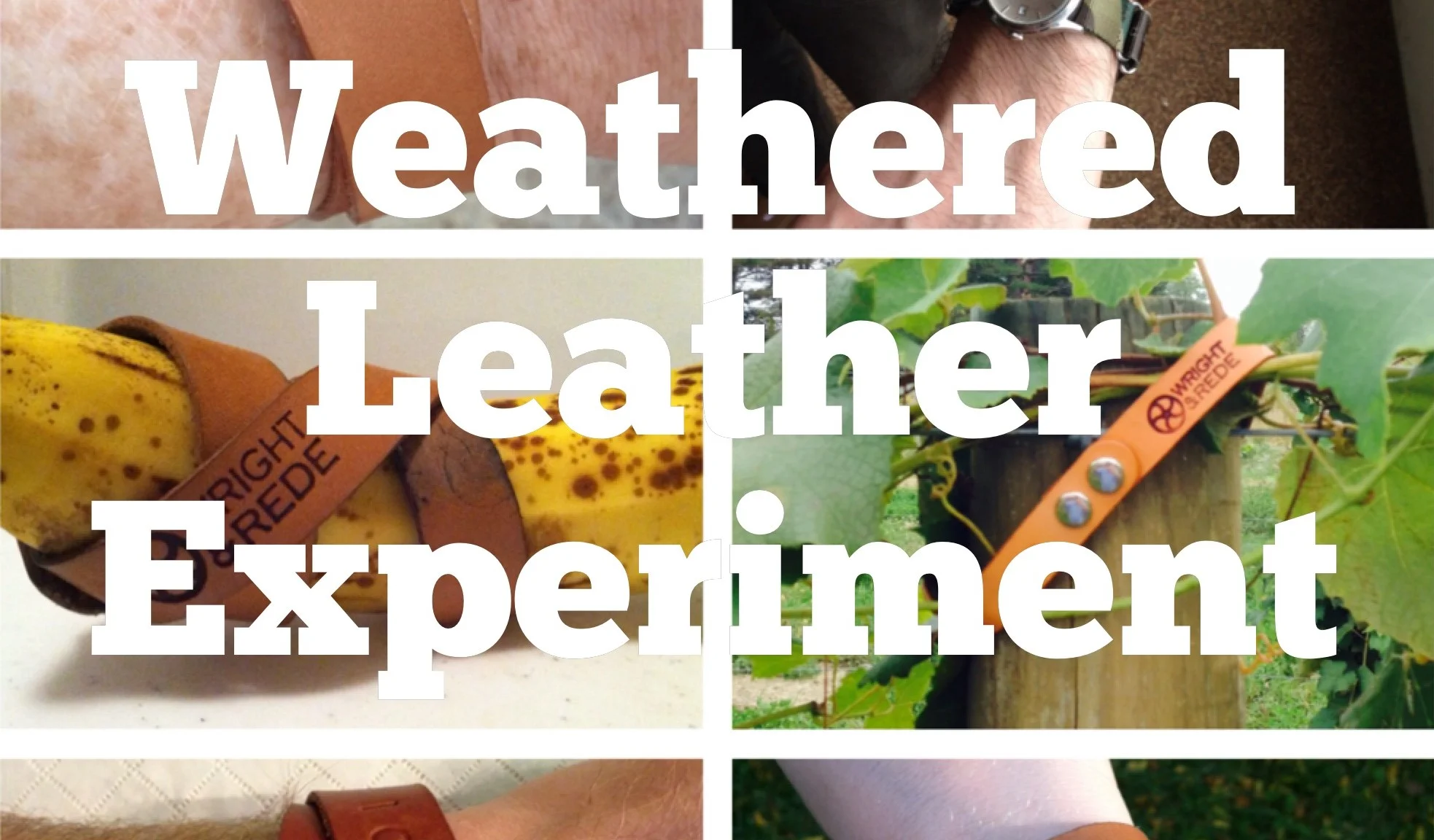
Weathered Leather Experiment bracelets three months in (the It's in the Mail Edition).

Well, I'm not sure what to say. I blame the holidays.  Here is the Weathered Leather Experiment bracelets three months in (The It's in the Mail Edition).


**Editor's Note** #4 & #9 were photographed by me at the Last Minute Market. Thanks for stopping by folks!!!

#1

1

#2

2

#3

3

#4

 4

#5

 5

#6

 6

#7

 7

#8

 8

#9

 9

#10

10 

#11

 11

#12

 Hopefully #12 isn't still sitting out in the vineyard?!?!?


#Bonus Round

Bonus

Keep Showing Up

I have never been a huge fan of motivational memes. Especially since they are typically presented in either a barrage of positive thinking or completely lacking in context. Let's face it, twenty separate quotes from Herodotus, Percy Bysshe Shelley, and Maya Angelou, won't make you get out of bed and face the day, no matter what font they are in.  A few days ago I stumbled onto this little nugget. For those of you who don't feel like clicking over it says,

"Many of the great achievements of the world were accomplished by tired and discouraged people who kept on working."


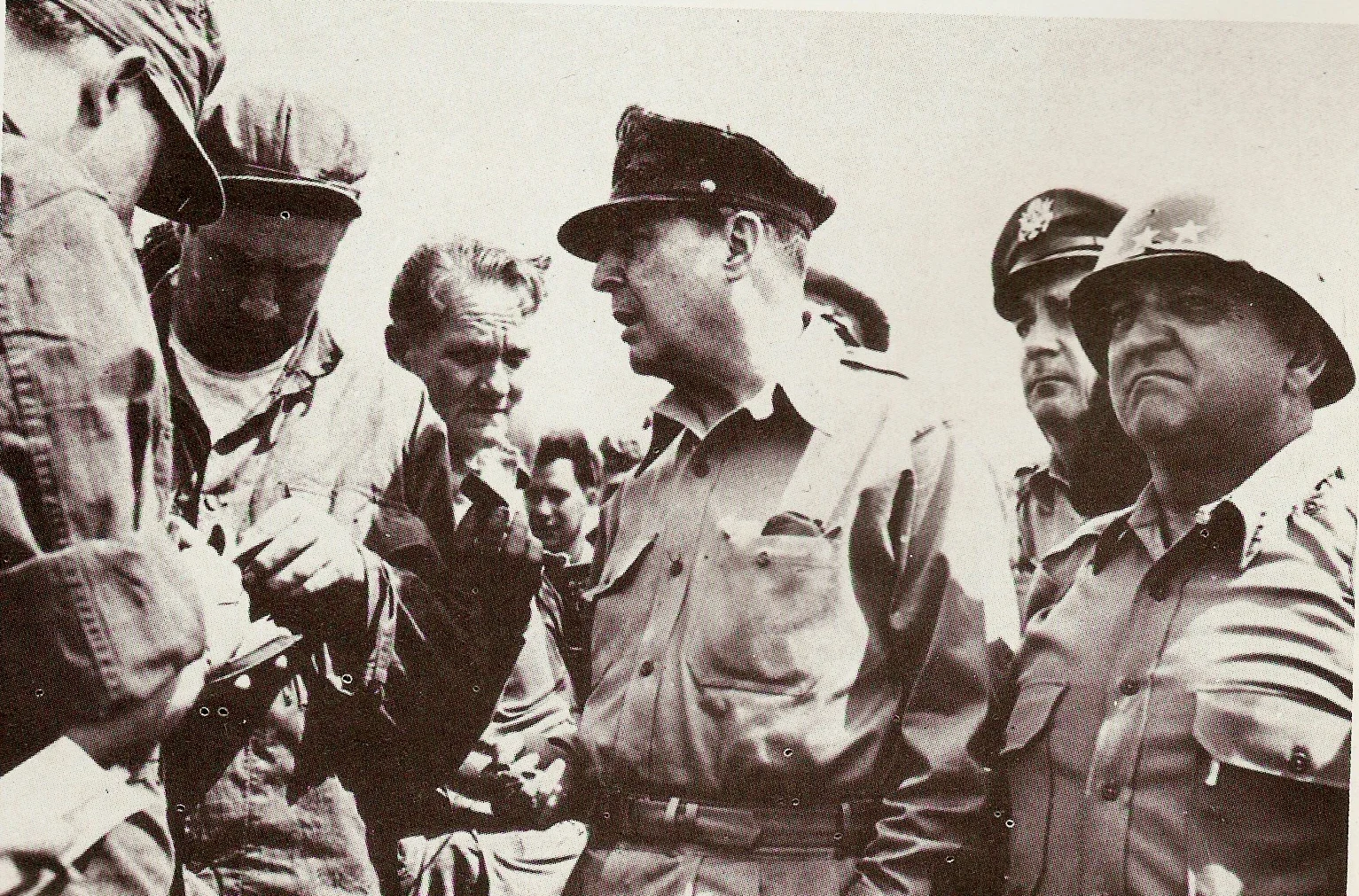
Wise words indeed. This quote happens to be paraphrased from a Douglas MacArthur quote (the above being more gender neutral).  It got me thinking about a little story I think about on a daily basis and how it relates to running a business in general.

This one comes from the good folks at Mason's Creamery. Like me, they are also experiencing the trials and tribulations of their first year in business. About midsummer they were handed a string a bad luck. First the lid blew off their freezer en route to an event. Then the trailer for the freezer broke. When they finally made it to the outdoor event it was raining and cold. Tired and discouraged they unpacked their sodden tent and began to set up for a long day. It was during set up that another, more veteran, vendor looked over at them and said something along the lines of,

"Welcome to owning your own business. The ones that make it are the ones that keep showing up."

-Attribution Unknown (help me out here Helen)


There are a lot of different things people claim that you must have in order to be an entrepreneur. Determination, charisma, good financial skills, chutzpa , gumption, or just dumb luck. In reality none of these qualities are worth a damn if you don't show up to use them.

Owning your own business is just like starting your own business. It is a decision that you must make. The day you decide to give up on your business is the day that your business fails.

I have really taken this message to heart. Right now I'm in the deep end of the holiday season. In true indie business style I've just found out that the hardware I use for my best selling item is no longer stocked on this planet. (Those of you hoping for a new watch band this Christmas should rethink your list. You have no idea how sorry I am about this.) One third of the leather I ordered for the season arrived way too thick. I'm really struggling with balancing making money versus making promises of Christmas delivery dates. I've had to tell more people "no" in the last month than I have all year. Finally, looming just around the corner, is the dreaded slow season. Which I'm really hoping to make it through with my credit score intact.

Any one of these makes me want to throw my hands up in the air and just walk away. Instead I'm planning on designing a new watch strap. I'm making products that work with thicker leather (iPad cases anyone???). I'm saying "yes" to those that I can and forgiving myself for those that I can't. I'm making lists of what I need to do now, but can't, so that when January rolls around I'll be able to keep myself busy.  Because that is what it takes to have your own business. All the leather in the world could be back ordered and I'd figure out something else to show up with.

So that is what I tell myself when I get up to deal with the day's problems. You just have to keep showing up.

A Bunch of Phonies

Right now is a stressful time for Wright and Rede. I'm heading into the holiday season for the first time and I don't really know what to expect. One of the ways I'm coping with this stress is by talking about it. Sometimes I learn the most interesting things by having casual conversations with people I'm close with.

After getting my one of my notebooks mentioned in Cleveland Magazine this month, I jokingly said "Maybe now people will finally start to realize that I don't know what I'm doing." It was a lighthearted comment but there is a lot of truth in that. I tend to joke about things that worry me.

I am an impostor, or at least that is how I feel. I've tricked people into thinking I know what I'm doing. I've mistakenly gotten attention I did not deserve by accident.  I always feel like I'm probably doing things wrong. Maybe it's because I am self taught. Maybe it's because I've never started a business before. I'm just fumbling in the dark here. Sometimes it seems like I live in a house of cards built of misinterpretations and coincidence, on a ground of false hope, and populated by little people made of LIES. Maybe I need to spend less time alone in my basement workshop.

It is true. Most of the time if feel like a fake. When someone buys something from me it fills me with pride, but a tiny part of me want's to say "Wait! Are you sure you want to buy that? It's not ready and I don't know what I'm doing."

I always just figured this was a personal quirk. Maybe it was just part of being self-employed. What I found interesting was what happened a week later.

The person I had been talking with was asked to join the board on a nonprofit they work with. While being very happy they also told me that they were kind of intimidated.

"I'm not old enough to be on the Board. It's kind of weird that they picked me. What do I know?"

There it was again. This feeling that they had somehow accidentally tricked people into thinking that they are qualified for something they are not. What really struck me was when they told me that they had confessed their fears to a coworker who said something similar.

"I sometimes feel like people are going to walk into this office at any moment and tell me that I don't know what I'm doing."

The interesting thing about these two is that they are both very successful. They went to good schools, work for a multimillion dollar company where they have both received accolades and promotions, and have happy families. So maybe this feeling is not unique to me.

I did a little research. Turns out this phenomena is called the "Imposter Syndrome" and it affects about 70% of the population at some point in their lives.  Tina Fey, Mike Meyers, Maya Angelou, and Stephen King have all been quoted as feeling like frauds.

Okay, so it's not really all that uncommon after all. I like to think that there is more to it than that. The same study suggests that more successful people are more likely to experience this phenomena. The Imposter Syndrome can be a driving force.

It is this feeling that makes me try to reach for the limits of my ability. If I always feel like I'm going to let people down then at least I can give them the best that I got. It is this feeling that is always forcing me to try to do better than I did before. It's feeling like a fraud that drives me to learn the skills that will make me a master rather than a fake.

Take a look at it from another angle. While doing my research I found that there is also something called the "Dunning–Kruger effect". This is "a cognitive bias in which unskilled individuals suffer from illusory superiority, mistakenly rating their ability much higher than average. This bias is attributed to a metacognitive inability of the unskilled to recognize their mistakes."  So that jackass at work that thinks he is Gods-gift-to-the-company, but is really just an incompetent buffoon, is displaying the Dunning–Kruger effect. Are you as happy as I am to know that there is a term for this???

So if you take a look at our Dunning–Kruger effected coworker (lets just call him Jack) you can see how the Impostor Effect can be a good thing. Jack thinks he does perfect work. Jack doesn't need to try hard. Jack doesn't feel the need to improve. Jack will never rise above his failings and Jack will never reach for his full potential. Poor Jack.

Personally I'm comforted knowing that I'm not alone in this. Most people feel like a fraud at some point in their lives. Statistically, it means that you are likely succeeding at something. More importantly it can be a powerful tool if you don't let it hold you back. So I say go forth, do the best you can, feel like a bit of an ass while you are doing it. It's okay to smile while you do it, and when you are alone with someone you trust tell them the truth. You might be surprised what you hear back. 

An Honest and Open Accounting of My First Year in Business

As of November 6th I will have been in business for on year. I've decided it was time for an honest look at the past year.

Part of being a small business owner is dealing with a lot of uncertainty and insecurity.  One of the ways to cope with this is to hear the story of those that have tread this path before you. So basically I read a lot of other maker's blogs. One of the things I have found most useful is to go back and read the blog entries from when they first started out. I've found that I can glean a little confidence by reading about how they didn't know what they were doing, how they took really bad pictures, and rambled in their posts. There is a lot to learn from those early posts. There is also a trend that I find very frustrating.  The posts tend to go like this:

May 21: Just bought our first supplies

June 2: Just got our first order!

June 28: Here is us at our first event

Dec 28: Just landed a contract with Anthropology.

I feel like some important things probably happened between June and December. That is ultimately the problem with life on the internet. Only the good or noteworthy moments get documented. No one ever posts "Accidentally bought $50 worth of the wrong-but-not-returnable hardware today. There goes the tiny bit of profit I had for this month." 

So without further ado here is an honest look at my first year in business.


Finance: 

Am I paying the bills? The honest answer is:  kinda. In the beginning the answer was a resounding no. My day job was still my main source of income and leather goods was just a little extra cash. Once I made the transition and quit my day job the answer was still no. I was busy enough that my day job was hampering my ability to produce goods but I wasn't busy enough to make a living. Mostly I was pleased that the business was able to pay it's own expenses and not drain our bank account. Without support from my wife I would have had to transition more slowly or have a fair amount saved up.  Once the summer show season rolled around I started getting close to making a living. Some weeks I made a lot more than I did waiting tables. Some weeks I was grateful that last week was busy. Little by little I've managed to make more at each event.

Here is where things get tricky. I hear all the time about how it can take years to make any profit when starting a business.  That didn't make sense to me. If you start with little or no overhead and keep your profit margin high enough then you make money. That is true, but only if you want to stay the same size. The growing is the tricky part. Basically what I spent the summer doing was thinking "After this next show I'll be able to pay us." Then the next show would go well and I'd have to buy more supplies to make even greater amounts of product for the next show. I was selling more at each show but having to buy more for the following show. Step by step I climbed until sometime in mid-July I was able to both pay us and buy supplies.

The bottom line: Am I making money? Yes. Wright and Rede is in the black despite all the initial investments and the cost of buying new equipment. Hopefully, after the holidays, I'll be heavier on that side of the ledger. I never took out a loan and owe nothing to either banks or creditors. Most importantly I am still making money. It's just that the money left over after paying the bills tends to go towards more supplies instead of leisure spending (IE. crap I don't need).


Social Media:

Let it be on record that I am an introvert.  I do not have special skills or training. I'm a normal person doing the best I can. The best thing I've learned here is to apply the if-I-didn't-know-me-would-I-give-a-crap-about-this filter to what I post. The most important thing I can say is to get in the habit of doing it regularly. Try a bunch a platforms and see what works best for you. I like Instagram the most and that is reflected in my followers. (If you are not following me on any of these platforms I won't mind if you take a minute and go ahead and hit that "follow" button. Really, it's okay. I'll wait...)

Facebook followers : 133 (I remember being really desperate around December to get to 27 so that I'd have analytics.)

Instagram followers: 208

Pinterest followers: 37

Tumblr followers:  19

Twitter followers: 55

Members of my mailing list: 143


Lessons Learned in No Logical but Handy Bullet Point Format:

  • The tent that you are bringing to a show to provide shelter for you is not waterproof. (!?!?!???)
  • Be the kind of guy that has garbage bags (or a waterproof tarp)  and duct tape with him at all times. You'll be really glad you carried them around all year on the one day you need them. Optional bonus: People might think you are a professional hit-man. Likely side effect: People might think you are a serial killer. (You win some. You loose some.)
  • You can never have enough weights on your tent regardless of what the weather looks like.
  • Really good photographs are almost as important as the work you produce. A really good photograph will; entice strangers on the internet to buy your stuff, make blog posts more interesting, get you into better shows, get shared by people who want their blogs to look cooler, look really nice in publication (which will make people want to put you in publications), and make you not look foolish when people ask you what you do for a living.
  • If you are accepted into an event it's a good idea to respond by saying thank you and here are some photos for publicity if you need them.  Organizers are under a lot of pressure and will use what they have handy when they need something for a flyer or press release.
  • If someone asks what you do for a living say, "I'm self-employed." If they want to know self-employed doing what, have an answer ready that is no more that five words. "I make handmade leather goods." Anything longer and they'll start to tune you out.
  • I find networking easy because I don't do it. Anytime I've had a five minute conversation with someone and exchanged business cards it has never turned into anything. The relationships I've found to be successful are the ones I've made with people while helping set up their tent, shivered next to them on a cold day, provided a confidence boost when business is uncertain,  suggested events they didn't know about, and watched their booth while they snuck off and bought some breakfast.  These people are not assets in my network. I just call them friends.
  • The best thing I can do when stressed out/lacking confidence/ insecure/ depressed/ or seriously unsure of what steps I should be taking in my future is to go get some real work done. By real work I mean making things out of leather not blogging or updating my mailing list or doing "research". I might not be any more confident at the end of the day but at least I have ten more wallets to sell than I did before.
  • To come up with a really good design: Draw out what you want to create. Then start taking things away from it. When you are down to the most simple way to do it: it's ready. 
  • Sometimes the best business opportunity is the opportunity to walk away from one. Once you start doing business with someone then you are in business with them.  To quote my dad on this one "the closer you get to the skunk the more you stink."
  • Read blog posts out loud to proof read.


Failures:

In my best estimation I have seriously burned two bridges, really pissed off one customer, made four things that either broke or were a different size than what they ordered, had 4 shows that were a total bust, and had to respond to at least 20 awkward emails in ways that were not graceful enough to answer successfully.

I have wasted 30+ square feet of leather because I wasn't paying attention,  not giving up when I should walk away, creating a bad design, or just didn't know what I was doing.  This translates into about $1000 - 2000 worth of ruined leather goods. (ouch! R&D days are hard days.) Additional I have about $300 worth of hardware that has no purpose or will never be used. (I was pretty sure I needed it at the time.)

The take away:

  • Not matter how hard you try you can't make everyone happy. Sometimes it's better to walk away and piss someone off than get involved in something that will be bad for your business. The other party will never understand this because they can only see how it would be good for their business.
  • Always try to fix what you can. It will usually be waaaaay more work than it is worth but you'll sleep better at night.
  • Custom orders tend to be more trouble than they are worth. It is nearly impossible to create what someone else has in their head.  (And if they start saying "Oh, since you are changing that could you do this too?" It's time to walk away or raise your price.)
  • Only buy supplies for what you are working on tomorrow not for "later." By the time later gets here you'll be working on a different project than you thought you'd be.
  • When they day is not going your way, despite your stubbornness, it is usually best to give up and do something else. 
  • When you really screw up, apologize in sincerity. If possible, look them in the eye when you do so.
  • Also, look people in the eye when you say thank you. Doesn't really belong here, but it's worth mentioning.


And to end on a positive note, Successes:

One year ago I raised about $160 in key rings sales to help support those effected by hurricane Sandy. This was the first $160 I made as an official business. My smallest accomplishment but the one I'm most proud of.

There are 500+ people out there that find me interesting enough to follow my goings-on via the internet.

I have stuck to my guns and never taken out any sort of loan.

I have insisted in making things the way I feel they should be made and have managed to get my customer's respect in doing so.

I have been in four separate retail locations.

I have landed my first few wholesale accounts.

I have helped two other people start their own business.

A year ago I was intimidated by the big holiday shows in Cleveland. I felt that I wasn't good enough to be in them. I was hoping that maybe in a year or two I'd be good enough to show at them. Those events were: The Bizarre Bazaar (now the Cleveland Bazaar) , Made in the 216, and the Last Minute Market. Wright and Rede will be selling at all of these events this year.

I've been in three publications and interviewed twice.

I've been on two vacations since starting this business. (I had not taken a vacation in the five years prior.)

I decided to follow my dreams and quit my day job. This might sound all nice and fluffy but it has real world effects. My blood pressure is down (I had prehypertension). I've lost weight. I'm happier more of the time. I'm more focused, driven, and confident. I feel that I'm all around a better person to be around.

I say all this not to brag but to point out what you can do if you put your mind to it. I am not extraordinary.  I didn't start with a bunch of money or a special set of skills. When I needed to make money then I found a way. If I didn't have a necessary skill then I learned it.  My point is that you really can live your life the way you want if you are willing to truly commit to it.


Thank you for sticking with me this first year in business. I've enjoyed meeting many of you. I've grown in ways I never would have imagined. I'm really looking forward to year two.



The Weathered Leather Update for September.

Well, we are one month in and already the bracelets are looking very different from each other.


WLE day one.


#1

Getting and little tan and some ruggedness on the edges.


#2

Two is getting some sun and a little darker.


#3

Three belongs to an adventurous 10 year old. He is keeping a journal to document the process. So far this bracelet has been tanned in the sun, coconut oiled, splashed with jelly, and gotten chicken poop on it.


#4

4 Sept


#5

Five is starting to show some interesting texture. To compare to Four this one survived a canola related baking incident. The lighter oil hasn't darkened as much as the olive oil.


#6


Six is developing a little hint of a tan.


#7

Has gone AWOL. Where are you #7? We miss you.


#8

Eight looks to have been pampered. Crisp edges and still on the lighter side.


#9

Nine has been doing some rough living. Rough edges and some nice scuff marks. I'm guessing it smells like coffee.


#10

Really surprised by how dark Ten has gotten already. It's been worn everyday, traveled to Rhode Island, and dosed with some "Saratoga Olive Oil Persian Lime Organic Olive Oil". Which, in addition to darkening it quite a bit, it "smelled lime-ish" for about half a day.  **I'm really loving the stories that are rolling in with these pictures.


#11

Eleven arrived at my inbox in the form of a banana-gram. Lots of nice color and I'm curious about the dark mark. Is that from the back of the snap?


#12

Twelve has an interesting story too. This nice color is what happens if you put the bracelet out in the vineyard for a month. Hasn't been worn. It's gotten lots of sun and rain. I'm interested to see what it looks like after a little oil.


And there you have it. It has only been a month so far and already each bracelet is totally unique. Thanks for playing everyone!!!

It's All In the Wrists

I use to spend a lot of time worrying about people stealing my ideas. In fact there are a lot of things I have missed out on because I spent so much time sheltering my good ideas that I never got to use them. I have only recently come to understand that this is not only harmful but pointless. If you have a successful idea people are going to steal it.

So why did I stop worrying about this. It is because I embraced an idea called "gesture". Gesture is an art school term for how an artist manipulates their material. Jackson Pollok had a frenetic gesture. Van Gogh had a very heavy one. The way I think of gesture is like terroir for people. It is the combination of personality, environment, technique, materials, limitations and emotions that create a "youness" in what you make.  I feel that learning to identify your gesture and then develop it is the single best thing you can do for yourself and your business.

It can be really hard to focus on this. We live in a society that values innovation. It seems like everyone is trying to come up with the next big idea. The problem with this plan is that as soon as you put that new idea out there, people will begin to replicate it, and suddenly it's not that big of an idea anymore.  I think it is more important to spend your time thinking about how to develop your gesture. 

Take DaVinci. You could spend your whole life trying to be DaVinci. You cloud learn his techniques, replicate his materials, move to Italy, buy a fancy hat, and paint similar subjects as DaVinci, but he'll trump you every time. That is because he could paint something that any stranger could walk past and say "that looks like a DaVinci." It's not because of his technique, his materials, his subjects, or his location but because of all of these things plus the unique thing that made DaVinci different from everyone else. 

When I am making a wallet (I'm seriously not trying to compare myself to DaVinci here) I try to think about all of the subconscious gestures I make while creating it. I'm left handed. I work in a poorly lit basement. I'm probably listening to music. I apply dye clockwise. I always start at the front and work my way back. I like it when the dye doesn't apply evenly.  I'm going to use a natural finish rather than acrylic. If I were to take just one of these, say uneven dye, and try to capitalize on it I might be successful for a moment, but other people would catch on eventually and I'd be out of luck.

Finding your gesture can be really hard and worse yet, it can't be forced. The only way to find it is examine how you do things and why you do them. Continually ask yourself what works for you and reenforce that. Work that really speaks of you is something that can never be copied. I think that this is the real value behind an item that is handmade.


Make MoneyToday / Make Money Tomorrow

I had the pleasure of getting out of the workshop briefly for a little human to human interaction the other day to drop some stuff off at my friend Stephanie's place for a photo shoot. We got to talking about some of the things she has in the works for the future. You have to understand, this is quite a list. Like a a lot of driven creatives Stephanie has a lot going on. Her two business (The Cleveland Flea and The Indie Foundry) keep her schedule full with planning events, organizing vendors, promoting the events, coming up with inspiration for new ideas, lots and lots of networking, and all the graphic design (and other ephemera) that going along with all of it. That is in addition to; traveling quite a bit, providing guidance to fledgling makers, being a cheerleader for anyone around her who is thinking about starting a business, being a Drum Major for many of us who have, running a pop up shop, and she just signed a lease on a new (or very old) building that she is going to run as a "creative clubhouse". One thing she said that stuck me at the time was, "Sometimes I have so much going on that I just have to focus on what I am doing this week."

That got me thinking about how I go about managing the precarious available-time/available-opportunity tightrope-walk that most of us in the creative community have to do every day. Sometimes it's really frustrating trying to figure out what to do with your day when a bunch of good opportunities are pulling you in several different directions.  What I have found helps me is a little system based around two simple questions, "What can I do to make money today?" and "What could I do to make money tomorrow?"

Make money today always takes priority. After all, today is what really counts. I don't want to look back at my life and think "Man, I had some really great ideas for the future".  So when I'm planning out my day I ask myself what opportunities are available today. For example: designing new things is fun. It's exciting to turn the great ideas in my head into physical things in my hands. Designing is important. I might come up with the next big thing and make it big. Who knows? But will designing a new product actually make me any money today. I already have plenty of things (maybe less glamorous) that I could be taking advantage of. I already have a strong product line. Am I making the most of it? How could I use what I've got right now to make a better living today. Could I try to get my products into more stores? Could I be working on developing traffic to my website? Would some better photographs lead to more sales? Could I build up my inventory so that I'll be ready when those orders come in?

This helps because it frees me from getting distracted by opportunities I might not be ready for. Laying a strong ground work for today will lead me to those plans for the future anyway. Another example: take that amazing thing I wanted to design in the previous paragraph. Had I focused on what I could do first (get in more stores, develop web traffic, take better photos) when I do finally develop that new product I'll be able to offer it to a much wider audience in a stronger way.

I'm not saying abandon the future. I have a giant notebook called "Make money tomorrow" that has all the ideas I wanted to pursue but didn't think I was ready for. When I'm ready to take the next step I have a great resource to draw from. It actually feels kind of liberating to take a really good idea that I might not have time for , write it down, and file it away, knowing that it will be there when I am ready for it.

Carpe diem, focus on one week at a time, make money today, call it what you want. The idea is always the same. The best course of action is frequently to capitalize on what you have right now and deal with the future tomorrow.

Keep your head up.

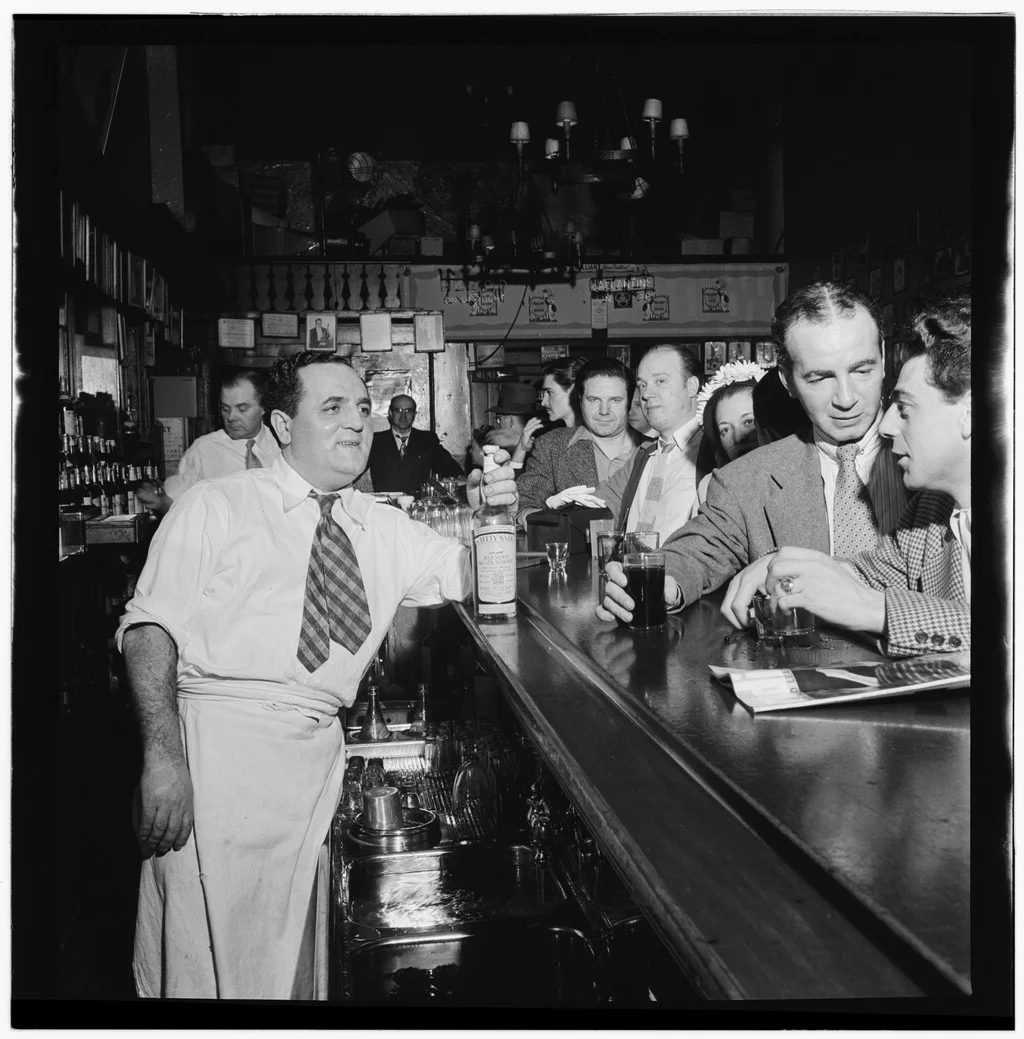
If  you ever want to figure out if you have a capable bartender there is a simple trick. Pick the busiest night of the week. Sit down at the bar and look at all the bartenders. The bartender with their head up, talking to people while they work, is the one with their act together.  The one with their head down, focusing on the immediate task at hand, is deep in the weeds.


I used to be the guy in the weeds. I used to hear it from my boss all the time, "You gotta keep your head up dude!"


I'd think, "Sure, I 'll keep my head up. Right after I make this next drink." (actually I was usually thinking "Holy crap! Please don't fire me!)


Then I'd go rushing around behind the bar, eyes set firmly on the drink before me. Past all the people who were desperately trying to get my attention, and I'd get deeper and deeper into the weeds.

I never understood it until I started training people. When it got busy, and the pressure was on, I'd see the new guy storming around with his eyes on the floor, shutting out everything else except what he need to do right then. 

There is something about stress and being rushed that gives people tunnel vision. You get fixated on the immediate crisis and everything else slips out of focus. If you are under continual stress (like the kind you get when starting a business) it's really easy to let the world around slip by while you over-focus on what will ultimately be an insignificant detail.  This kind of tunnel vision is dangerous because it's sneaky.

A little under a year into launching my business and I've been fairly successful. I've been paying the bills. Revenue is increasing. I'm getting a little recognition and repeat business. I quit my day job and didn't die! Considering that my entire business plan was to quit my day job and not die, I should have been  ecstatic. For some reason I have been  getting increasingly dissatisfied. The elation of being self employed still seems to be out of reach.

I chalk up part of this to a healthy entrepreneurial spirit. Enough should never be enough and any good entrepreneur should always be reaching for loftier goals.  There is something more than just that though. Then it hit me. I've been keeping my head down.

I've been so focused on making sure the bills get paid that I haven't been thinking about where I'm going. Right now I'm planning out my holiday schedule and drawing up new designs. It seems like a lot of progress but really all my planning ends in January. It's hard to be satisfied with a master plan that reads "Pay bills until January".

So I got out a sheet of paper and started to write out a five year plan. Not in the sense of what strategy I'd like for my business to follow in the next five years, but where I'd like to be five years from now. I wrote down what was important and how I thought I could get there.

I tried to avoid things like "make more money" and tried to focus on how I would like my life to look.  I wrote down things like, have plenty of family time, travel more, gain a greater sense of security, make enough extra income to pay someone else to mow the lawn (it was seriously hot that day and that lawn really needed mowing).

Once I spent a little time figuring out the direction I wanted to take my life things seemed to make a lot more sense. I started to be able to come up with post-January ambitions. I began to see how my holiday schedule was just one little part of a greater puzzle. That persistent drive came back.

So I've decided to make this a consistent part of my business planning. Every few months I plan on sitting down and going over my previous goals and then spend some serious time doing a little day dreaming.


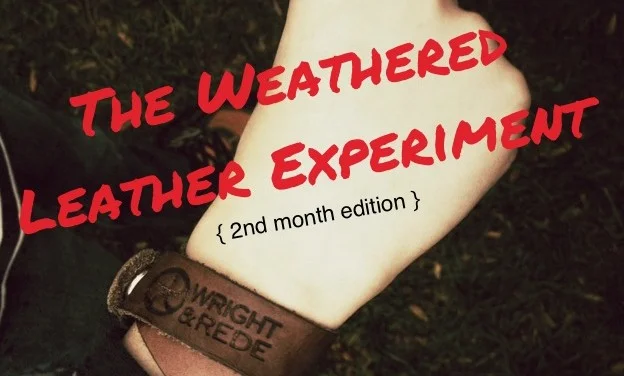
The Great Weathered Leather Experiment

**Applications are now closed. If you are just getting here from Facebook or Instagram make sure to sign up for the mailing list to get the drop on fun projects like this.


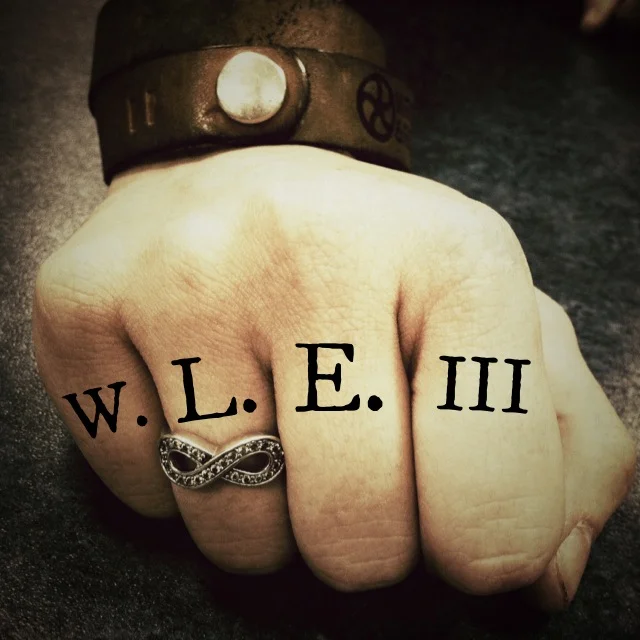
I spend a lot of time talking to people about how the leather I use  is the kind of leather that ages well. There is a lot of use of the word patina. It's a beautiful and individual thing, but kind of hard to show people if you don't have lots of well worn stuff.

The even cooler part is how each piece will develop its own character based on how the person uses it. Every item I make is handmade and unique, but that is only half of the equation. The other half comes from the people who buy it, carry it around, beat it up, and live with it.

So I have devised an experiment. Twelve lucky individuals will receive a free bracelet. Each one will be numbered and unfinished. In exchange for this bracelet I ask that they document the aging process over a twelve month period.

The nitty gritty:

  • These are free. You don't have to pay anything for them.
  • Each bracelet will arrive unfinished with a single coating of oil on it.
  • Each will have a number so we can all keep track of them.
  • Once every month I will send out an email reminder asking you to snap a photo of your bracelet and fill us in on any interesting developments in the life of the leather (IE. my dog chewed on it. I spilled beer all over it. I took it to the beach. I just put some conditioner on it...)
  • By submitting photos you will be giving me permission to publish them on the internet. I will not share any of your private information with anyone, ever. Instead there will be an update, for example,  from bracelet 3 of 12 with the picture you shared that month.
  • Only one bracelet per person.
  • Only 12 bracelets will be made available.
  • Please measure for bracelet size carefully as I will not be replacing mismeasured sizes.

The don't be a jerk clause:

  • Hey, don't be a jerk. Yes, it is free, but I expect you to send in some pictures and follow up on my emails. I'm too small of a business to give away stuff for nothing. So please help me out and stay on board for the full 12 months.

If this sounds like fun to you email me at Rede@WrightandRede.com with the subject line the "The Great Weathered Leather Experiment."  I will only accept the first 12 emails I receive. Sending multiple emails will only annoy me. If you are one of the first twelve I will send you an email asking for your bracelet size and the address I can mail it to.

Looking forward to seeing how this works out. Stay tuned for exciting updates.


Value Remains

I've decided to start a campaign to reclaim the meaning of the word "value".  It is an idea that we all understand, but is very difficult to define. I think this is why it has been so easy to co-opt.  I consider the meaning of the word value to mean something's intrinsic worth relative to the  demand of obtaining, or maintaining, that thing. 

A personal belief that one maintains despite the pressures of the outside world. A work of art that has inspired countless people and been preserved through centuries. A cast iron skillet bought at a hardware store that gets better and better, but only if you take care of it. A grandfather's journal from World War II which sailed across oceans, was sheltered from bombs and bullets, and carried through all the years of his life.  These are things of value.

Value does not mean a cheap deal. I'm tired of seeing things that are labeled "value brand", "great value", "value sized". When you begin to think about value in terms of its real meaning then you have to question where the deal really is. If you are willing to sacrifice next to nothing for something then it must be worth next to nothing. So is it really such a great deal to get a great price on something that is nearly worthless. To say it in another way, "value is a function of hard work and ingenuity rather than the product of financial acrobatics, clever arbitrage or casino capitalism." (from the Rustbelt Almanac)

Nor is value created by paying a high price. Does a plain white t shirt have a greater value just because it cost $120 (sorry Kanye)? Is a high-end sports car valuable? To a banker? To a single dad? To a carpenter? Value is not a function of cost alone but a reflection of cost versus intrinsic worth. 

Fads will come and go. Sticker shock and impulse-buys will get paid-off or used up. Many things will quickly pass through our lives, but it is the things of value that stick with us. Yes, you might have to work for them. Old leather boots need saddle soap and conditioning. A classic Mustang is going to spend some time on blocks getting fixed. An old cookbook has to be handled with kid gloves and protected from stains. Personal convictions will have to be reenforced and rallied when the tide is contrary. Trends will wane,  bills will be paid-off, what is hot today will fizzle tomorrow, and cheap deals will be quickly used up and forgotten. Things of value are those which we endeavor to carry with us. When the price is paid, it is value that remains.

I try to keep this idea a constant in my life. When I'm designing something I always try to ask myself if I'm responding to a trend or will this be something that will still be relevant decades from now. Not only does this apply to the things I produce but also in the way I live. I try to think not only in terms of "are the sacrifices I make equal to the life I am living", but also "am I living a life equal to the sacrifices that I am making for it". It is through this filter that I am able to figure out how to invest myself in the things that are really of value to me and avoid the things that seemed really important at the time but weren't. What are the things that you value?

Untapped resources

It happened. I finally broke down and bought a real digital camera. While this might not be so significant to a lot of people this is a big deal for me. Photography is my lost love. I've been taking pictures since I was thirteen. I have a degree in photography. I also haven't had a functioning camera in almost ten years. I'm sure you are wondering what kind of person goes to school for photography and then puts down the camera when they graduate? Well, I am.

I could give you a bunch of excuses: I had bills to pay, not enough time, the economy fell apart and no one wanted to buy art. That is not the point of all this. The point isn't even that I'm going to start taking pictures again. The point is why.


Wright and Rede's table at the Cleveland Flea


When I started this business I knew I had a wide array of skills that I was hoping would some how translate into income. I was good at working with my hands.  Leather work was my focus at the time. So leather work is what I started with. Once I launched my business I began to realize that I had a lot more skills I could be taking advantage of.  Skills I never really thought about until I needed them. My background in photography has allowed me to not only take quality photographs of my work (I can not stress how important a good photograph is when marketing on the internet. Your product is only as good as what people can see on their screens after all.) but to write a story about who I am with my images. No one wants to read about how hard my day was. A picture, taken from my point of view (feet up, beer in hand, as the sun is setting) instantly conveys a message and lets the viewer stand in my shoes for just a minute.


Relaxing after a long day


Then I started to realize that I had a lot of other skills that were underutilized. My years spent as a bartender helps me to engage just about anyone I meet. Talking to strangers is hard, but because of my years in the service industry I do it without a second thought. I could even argue that my high school English classes are finally paying off. Having been drilled over and over again on how to express myself clearly (Thanks, Mrs. Morgan) I am able to write in an intelligible manner.


Key rings at the Cleveland Flea


My point is that when I dreamed up this job it was one dimensional: Leather worker.  In reality it is more like:  Leather Worker (photography and bar tending experience required. Must also have a working knowledge of basic construction, inventory management, journalism, and bad jokes). So what skills do you have that you could be taking better advantage of? Did you really like statistics in school? Did you take dance classes? Are you a horse whisperer? Maybe it is time to take inventory and make sure you are taking advantage off all of your assets, not just the ones in front of you. After all, if your business reflects who you are as a person shouldn't it reflect all that you are capable of?

Don't be a dick boss.

I think one of the hardest things about being self-employed is learning how to be my own boss. It is a tricky thing but not in the way I thought it would be. You see, I was a notoriously lazy kid, and I remember thinking that I would never be able to go into business for myself. I was a slacker and would never get anything done. Strangely the opposite is true.

I find my self filling up every free moment I have. If I'm not working, I'm thinking about work. When I am working, I'm thinking about what other work I need to be doing. I fall asleep worrying about what needs to be done tomorrow and I get up worrying about getting enough done in the time I have. The problem is that milestones aren't reached every day. Like every other job in the world, most days are filled with getting by.

Somewhere along the line I've turned into a jerk of a boss. I'm the kind of guy that wants people to come in on the weekends, watches what time they get to their desks, and judges those who aren't staying late. I became my own boss so I wouldn't have to deal with jerks like me.

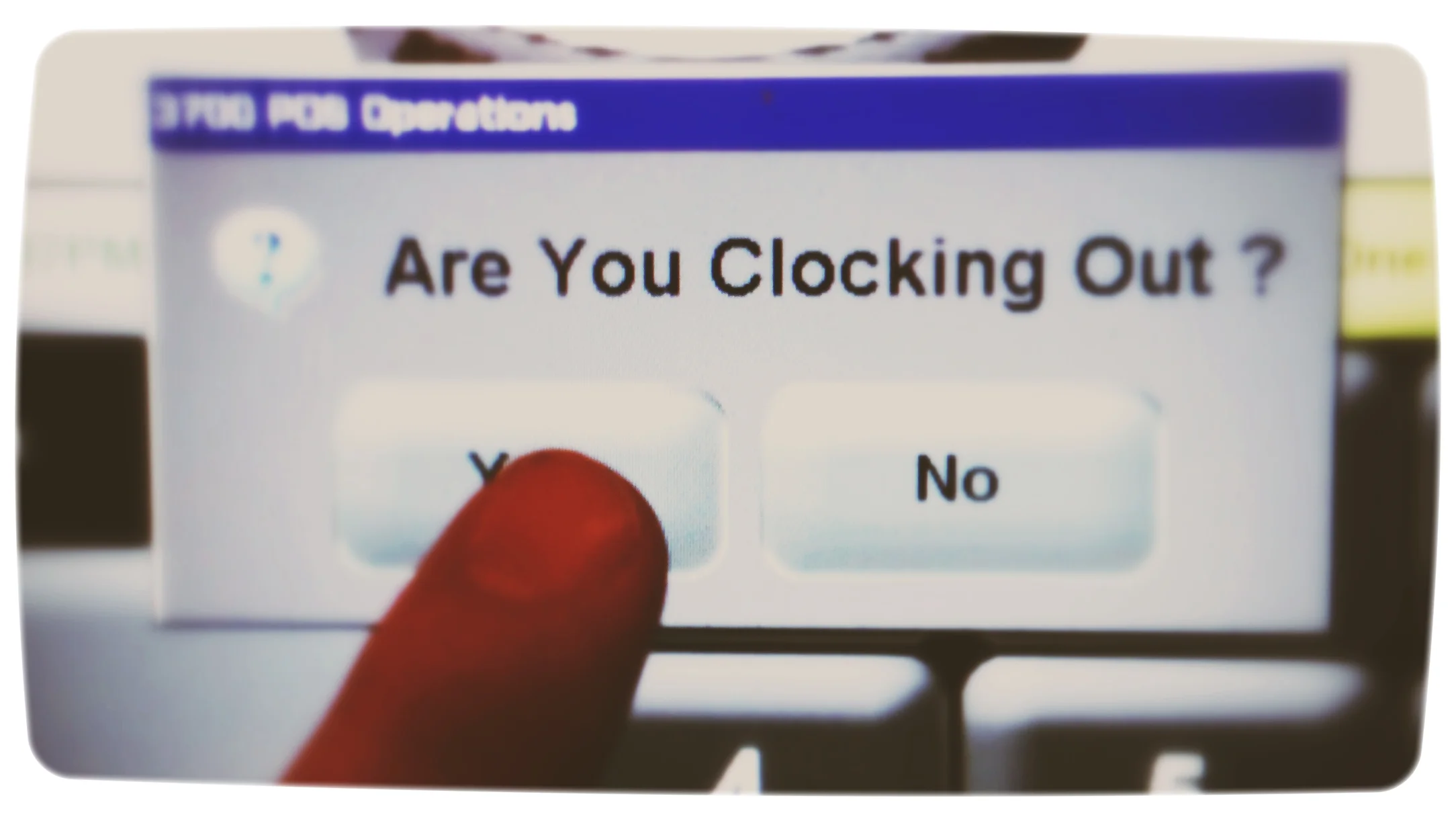
I never thought that I would have trouble learning when to not work. At some point I have to flip the switch and say, "Ok, I'm done for today." and leave the job behind. I've found it helps to make a routine change. When the day is over I change out of my work clothes (even if it is from one pair t-shirt and jeans to a different pair of t-shirt and jeans). I'll get out of the house, get some exercise, cook dinner, have a cocktail, or find a happy hour. I've even thought about figuring out a way to clock out. The import part is to get some distance, leave it all behind, and give yourself a chance to get some perspective for tomorrow.

When you are your own boss, at some point you have to decide what kind of boss you want to be. I don't know about you, but I'd like to be the kind of guy I would want to work for.

Growth Spurts

I read a really interesting article today that I think is worth talking about. The subject was "overcoming learning plateaus".

The general idea behind a learning plateau is this:  skill and knowledge are gained in short bursts and the rest (most) of the time you are either not improving or getting worse. This is something I never knew existed. Or at least I never knew existed for other people.  As a working creative person this system can be devastating. What you create intimately reflects who you are as a person. When I sit down to make the same wallet I've made countless times before and I can't even get the easy parts to come out right, what does that say about me. Am I doomed to failure?

Starting a business freak-outs lll


The answer is that I've hit a plateau. The part I always seem to forget is the week before when I sat down and dreamed up a new design in fifteen minutes that I was really happy with, or the morning I somehow accomplished a day's worth of work before lunch. On those days I think  "Man, I'm so great. Everything is just falling into place. It's like destiny is showing me the path." Then a week later I'll spend a morning screwing up basic measurements and decide that I'm going to have to live on the street. 

I think plateaus are important to creative people. They keep you humble and give you time to look back on your progress so far. The solution I've come up with is to learn to accept them. All you can really do is keep slogging on anyway. You just have to slow down and keep trying to climb up and over. Eventually you'll be on your way to greater heights and wondering what the problem was.

I'd love to hear other peoples thoughts on this. The original article can be found here for your perusal.


How did you get started?

In my last post I covered why I got started. In this one I want to cover the other part of the equation; how.  I get asked this question a lot. I'm never quite sure how to answer it. I feel like no one wants to hear,

"Well, I needed a way to pay the bills, and this seemed like it could work."

That's not really the right answer anyway. I'd love to tell you that I come from a long line of leather workers, and that this was my destiny. That would be a lie. The truth is that I had never even picked up a leather working tool until about ten months ago. So how did I get started? The answer is really simple. I just started.

This isn't my first business. I spoke about Little Bird Ice Cream a little in my last post. What is really important about this story is why it didn't work. I spent years playing it safe. I did research. I doodled logos, stressed out about the perfect name, developed recipes. It never got off the ground because I wasn't really making anything. The perfect logo, a well organized business plan, and a masterful secret recipe don't mean shit if you aren't making or selling anything.

The textbook method for starting a business goes like this.

  • Do market research and assess the needs of your target demographic.
  • Develop a formal business plan. This includes listing the names of your marketing department, accountant, and lawyer (I actually read one of those business-plans-made-easy books where you fill in the blanks and end up with a successful business. I gave up when the author actually wrote "If you can't afford a lawyer and an accountant you don't have enough money to start a business")
  • Sell this business plan to a bank (Here is where you stop being self-employed (the bank is now your boss) and get to play Russian Roulette with your credit score.)
  • Invest all of your capital in overhead ( a lease, fax machines, custom letterheads, and a flashy website)
  • Try to figure out why not enough money is coming in.

With Wright and Rede I tried a different approach. I got online and ordered an amateur leather working kit for $150. I spent the next month figuring out how to make a simple wallet. While talking with a coworker my new hobby came up and I showed him my wallet. He said he'd take one, and I sold him one for $35. I decided that if I could use my remaining materials and sell three more I would go into business. I sold three by the end of the month. I took my $140 and bought more leather. I was in business.

My point is that I didn't have a business name, a license, insurance, a series of goals, or even any experience. I just started making something. If you want to start a business then start a business.  Do not go get a loan. Start with $100 and figure out how to make money with just that $100. It doesn't have to be your dream job, just a way to make your own money. This way you can sidestep all of that daydreaming planning and start creating some momentum. When you have enough income to pay a graphic designer to create a logo for you, that is when you should worry about a logo. It's really a small risk. Wost case scenario you loose your $100. All the other things that are keeping you back are really just bridges that can be crossed when you get to them. 

I'd highly recommend the $100 Startup by Chris Guillebeau  and Think and Grow Rich by Napoleon Hill  as good reads for starting your own business. You can gloss over the motivational parts if that's not for you, but there are some really sound ideas in here if you look for them. ***I am in no way connected to either of these authors and I am not profiting from recommending them in any way. (Besides, you can find both of these books at your local library.)

In Media Res

It  would be convenient to have a nice beginning for this story, but as tends to be the case with real life, there are no convenient beginnings.  So maybe I won't start with the beginning, but with a beginning.

Do you remember taking aptitude tests when you were in middle school? You would fill in little bubbles on the Scantron sheet to find out if you were meant to be an architect or a plumber.  I cheated.  The test were boring, so I'd create patterns in the bubbles. Sometimes I was supposed to be a park ranger, others a mechanic.  If only it were that simple. I progressed to being a high-school trouble maker. A's in Art, and D's in Math. I drifted though a few different colleges. I didn't know what I was doing there, but that was where you go when you finish high-school. Five-and-a-half years later I had a degree in photography and no idea what to do with it.

While I was in college my sister got me a job in the kitchen where she worked. I planned on working there for a year while I figured myself out. That was twelve years ago. Now, I have always been known for being equal parts clever and determined, both of which are great assets in the restaurant industry, and that made me successful. I worked my way up to running the bar (how I became a bartender is a great story I'll have to share some day.) I bought a house, met my wife, and managed to live a comfortable life. I wasn't happy. I was miserable. I moved to different restaurants hoping the change would help. It didn't.

The problem wasn't the restaurant. The problem was me. I've never been comfortable having someone else decide my fate. It chafes. So I decided to go into business for myself. I had planned everything out perfectly. I was going to start a gourmet ice cream company. I spent years designing logos, researching recipes, looking up rules and regulations.  All the while working at my regular job, telling myself that it was all worth it because I was on my way out.

I was wrong. I spent four years planning that business. In that time four separate ice cream joints opened around my house and I had to conclude that there was plenty of ice cream around. I spent so much time planning the perfect business that I had missed the chance to start one.

Then I read about a conference. This was a conference about entrepreneurship. The main speaker had an interesting proposition. He wanted everyone to take $100 and start a business with it. That's it. Don't follow your dreams, don't plan the perfect strategy, don't find investors, don't search for you dream job. Just take $100 and figure out how to make money with just that.

For $100 I couldn't start a food service operation. So my main area of expertise was out of the question. I had always had a slew of hobbies. I was currently on a leather working kick. I had made myself a nice simple wallet and when I showed it to a coworker he asked if he could order one. That was when my business started.

I didn't have any business cards, a vendors license, a company name, a logo, or any of that stuff I had stressed out about before. I did have a demand for one wallet though. That was September of 2012. I decided that if I could sell four items by November I'd have a go at it. I sold four in two weeks. So I had a friend design a logo, came up with a name that wouldn't limit me too much, and started selling leather goods. I never got a loan. I never had a plan before hand. I just figured out things as I went along.

Then one night it happened. I was standing around waiting for the restaurant to get busy. I was stressing out because I was rushing around all day trying to get leather goods in the mail and still make it to work on time. I was looking around at the empty tables and thought to myself "Is this really what I want to be doing with my life?". I had come to a crossroad. I could stay at the job I knew would pay my bills, but had no future in it, or take a risk and see what happens. I went home and had a long talk with my wife that night. The next day I went into work and told them I'd be leaving.

So here I am. Back at the beginning of this story. I quit my day job and took the plunge. I don't know if I will succeed and I don't really have a plan worked out. I do know that if you want something it won't come to you. You have to go out and get it.  So wish me luck.